

PTE vs IELTS: Which English Test Should You Choose in 2026?
English proficiency tests like the Pearson Test of English (PTE) and the International English Language Testing System (IELTS) are important if you’re planning to study abroad, apply for a visa, or pursue migration.
You’ve probably come across many discussions on PTE vs IELTS. Since both tests are widely accepted and assess the same language skills, choosing between them can feel overwhelming.
Here’s the thing — picking the wrong test might slow down your study plans, challenge you with unfamiliar formats, delay your results, or even cost you more.
This guide will walk you through everything you need to know about PTE vs IELTS 2026 so you can confidently choose the test that best fits your goals, learning style, and visa requirements.
Understanding PTE and IELTS
Understanding PTE vs IELTS will let you know which test is better for your goal whether that be for studying, working, or migrating abroad.
What is PTE?
The Pearson Test of English (PTE) is a fully computer-based test designed to evaluate your English speaking, reading, listening, and writing skills. It’s conducted by Pearson, a globally recognized education company.
PTE uses AI technology for scoring, which means there’s no human examiner involved. It’s fast, fair, and efficient — especially if you’re tech-savvy. Most universities in Australia, the UK, Canada, and New Zealand accept PTE scores for study and visa applications.
Recommended: PTE test preparation classes
What is IELTS?
The International English Language Testing System (IELTS) is one of the oldest and most trusted English tests. It’s managed by IDP, the British Council, and Cambridge Assessment English.
There are two types: IELTS Academic (for university admissions) and IELTS General Training (for work, immigration, or PR). You can choose either a paper-based test or a computer-based test, with the Speaking Section done face-to-face with an examiner.
It’s accepted by thousands of institutions worldwide and is commonly used for UKVI, IRCC, and Australian Home Affairs applications.
Key Differences: PTE vs IELTS
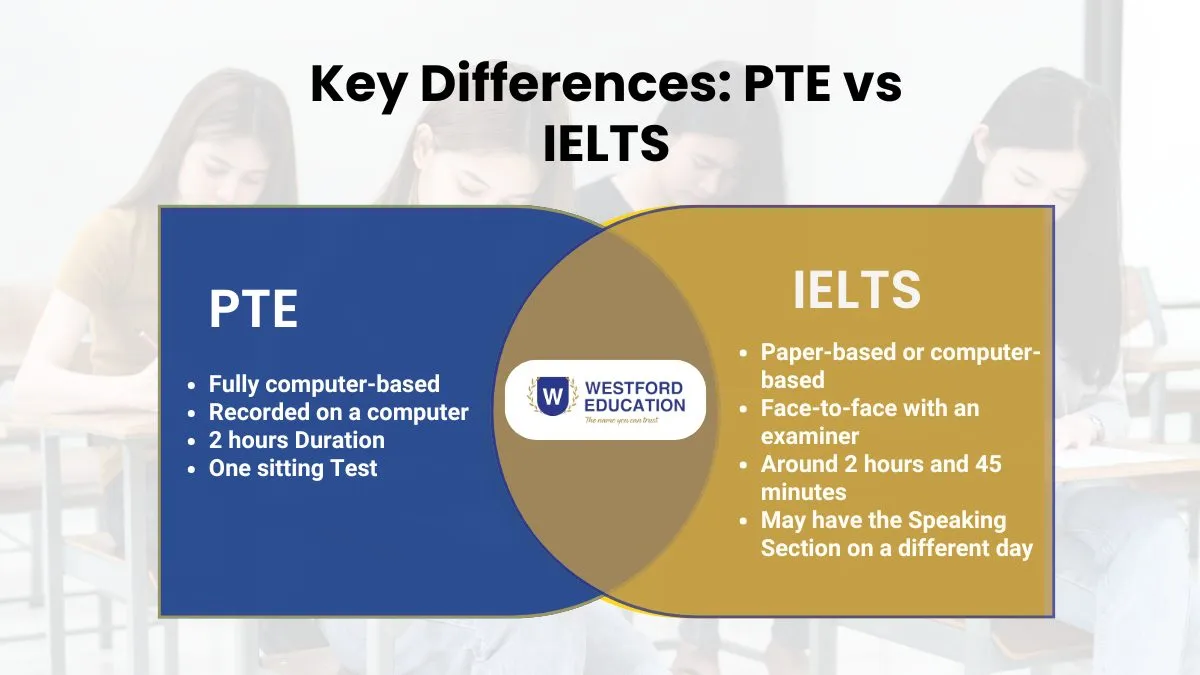
What is the difference between the PTE and the IELTS? PTE is more modern and faster, whereas IELTS allows for more flexibility in terms of paper vs. computer and traditional testing methods. PTE may be more comfortable for you if you are anxious about speaking in front of others. However, if you prefer human engagement, IELTS may be a better fit for you.
Here is a short table on PTE vs IELTS on their test structure:
|
Feature |
PTE Academic |
IELTS (Academic/General) |
|
Format |
Fully computer-based |
Paper-based or computer-based |
|
Speaking |
Recorded on a computer |
Face-to-face with an examiner |
|
Duration |
2 hours |
Around 2 hours and 45 minutes |
|
Test Day |
One sitting |
May have the Speaking Section on a different day |
PTE vs IELTS Scoring Systems and Results Turnaround
PTE uses a score range of 10–90 based on an AI algorithm. IELTS uses a band score system from 1–9, evaluated by trained experts.
|
Test |
Scoring Method |
Results Time |
|
PTE |
AI-based (10–90) |
1–3 days |
|
IELTS |
Human + system (1–9 bands) |
3–13 days, faster if computer-based |
Both tests align with the CEFR (Common European Framework of Reference), a globally recognized standard for comparing and interpreting scores across English tests like PTE and IELTS.
Test Content and Question Styles
If you feel confident in multitasking and real-life scenarios, PTE will feel more natural, but if you prefer structured and traditional test formats, then IELTS is the safer pick.
IELTS questions include:
- Essay writing
- Face-to-face speaking
- Reading passages
- Matching & multiple-choice
PTE focuses on:
- Integrated tasks (like summarizing spoken texts)
- Describing images
- Repeating sentences
- Typing responses on a computer
Recommended Read: IELTS Classes in Kathmandu
Preparation Strategies: PTE vs IELTS
Regardless of the examination you choose, preparation materials and mock exams are important. Thus, the following techniques will help you achieve high grades:
IELTS Study Advice:
- Get comfortable crafting lengthy essays.
- Pay attention to grammar and vocabulary.
- Simulate interviews for the Speaking Section
Tips for PTE Prep:
- Become proficient with computer navigation
- Practice rapid typing and audio tasks
- Use practice exams with AI-based scoring.
Both offer official preparation courses, practice apps, and coaching centers, especially if you’re in Nepal, with test centers in Kathmandu and Pokhara.
Ready to achieve your target IELTS score? Start preparing with expert guidance and proven resources today. Explore Westford Education’s IELTS Preparation
PTE vs IELTS: Quick Comparison Table For Nepali Students
|
Feature |
PTE Academic |
IELTS |
|
Format |
Computer-only |
Computer or paper |
|
Speaking |
Computer (recorded) |
Face-to-face |
|
Duration |
2 hrs |
~2 hrs 45 mins |
|
Scoring |
10–90 AI-based |
1–9 bands |
|
Results |
1–3 days |
3–13 days |
|
Validity |
2 years |
2 years |
|
Used For |
Study, PR, visas |
Same |
|
Top Countries |
Australia, Canada, UK |
All global |
|
Test Cost (Nepal) |
NPR 28K–32K |
NPR 27K–30K |
|
Retake Option |
Anytime |
Yes + One Skill Retake |
|
Practice |
Online-focused |
Books + online |
If you’re wondering where to join for IELTS or PTE prep, Westford Education guides you based on your interest and goals!
Westford Education Location
Westford Education: Your Best Consultancy for PTE and IELTS Preparation Classes
Thousands of students and applicants around Nepal have benefited from Westford Education’s assistance in achieving success on the PTE and IELTS tests. Whether your goal is immigration, work visas, or study abroad, our expert will help you with:
- Mock tests with AI and human scoring
- In-depth coaching (online & offline)
- Personalized test selection guidance
- Up-to-date preparation material
Note: We are not limited to PTE or IELTS preparation classes. Explore our various and best test preparation classes.
Which Country Accepts PTE and IELTS?
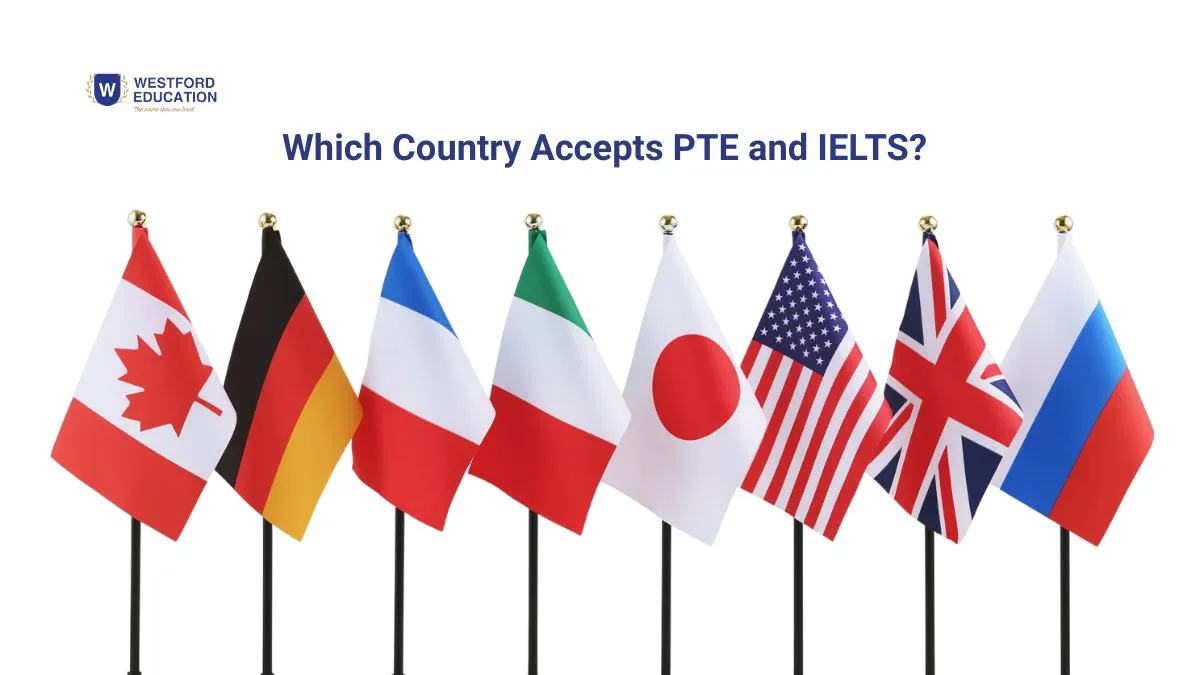
Different countries and institutions accept PTE and IELTS for various purposes, so it’s helpful to know where each test is recognized.
- Canada (IRCC accepts both for Express Entry)
- UK (UKVI approved)
- Australia (Home Affairs lists both tests)
- USA & New Zealand (Most universities accept both)
Still, check individual institutions or visa requirements for specific preferences.
How to Choose Between PTE and IELTS?
PTE vs IELTS difficulty is something you need to consider. Choosing the right test comes down to your personal preferences and needs — whether you feel more comfortable speaking to a person or a computer, prefer handwriting or typing, need quick results, or want the option for a paper-based test.
Considering your study goals, visa deadlines, and learning style will help you pick the best fit.
Who Should Choose IELTS?
- You’re more confident speaking with a person
- You prefer handwriting essays
- You want the option of a paper-based test
- You may need a One Skill Retake (only IELTS offers this)
Who Should Choose PTE?
- You’re comfortable with computers
- You want fast results (usually under 48 hours)
- You prefer integrated, tech-driven tasks
- You find talking to a computer easier than talking to an examiner
For You: Best PTE Classes in Kathmandu
Final Thoughts and Recommendations
PTE vs IELTS acceptance, both are valid for two years after the date of your examination, so there’s no one-size-fits-all winner. Your best choice depends on factors like whether you prefer working on a computer or paper, your speaking comfort, application deadlines, and how quickly you need your scores.
Also, consider how much preparation support you want according to the PTE vs. IELTS test format to decide which will feel less stressful for you. Taking practice tests of both can help you decide which best suits your style.
If you’re still unsure, reach out to us at Westford Education. We’ll guide you on choosing the right test, planning your preparation, and booking your exam.
Frequently Asked Questions
What is the main difference between PTE and IELTS?
PTE is fully computer-based with AI scoring, while IELTS can be paper or computer-based and includes a face-to-face speaking test.
Which test is easier to pass?
It depends. PTE might feel easier for tech-savvy students, while IELTS suits those who prefer traditional exams.
How long do test results take to arrive?
PTE results usually come within 1–3 days. IELTS results take 3–13 days, faster if computer-based.
Is PTE vs IELTS for immigration a major factor when choosing the right English test?
Yes, PTE vs IELTS for immigration is crucial. IELTS is accepted by all major immigration bodies, including Canada’s IRCC, while PTE is not yet accepted for Canadian PR but is approved by Australia, UK, and New Zealand. Always check visa-specific test requirements before choosing.
How often can I retake the PTE and IELTS test?
PTE allows retakes anytime after your result. IELTS also allows retakes, with a One Skill Retake as an option.
Are PTE and IELTS accepted by all universities worldwide?
Most universities worldwide accept both. Always confirm with your target institution.
What is the validity period of test results?
Both PTE and IELTS test results are valid for 2 years starting from the date you take the exam (the exam date), not from the date you receive your results.
How much does each test cost in Nepal?
If you’re budgeting for your exam, knowing the test fees is essential.
PTE: Around NPR 28,000–32,000
IELTS: Around NPR 27,000–30,000
PTE is fully computer-based with AI scoring, while IELTS can be paper or computer-based and includes a face-to-face speaking test.
It depends. PTE might feel easier for tech-savvy students, while IELTS suits those who prefer traditional exams.
PTE results usually come within 1–3 days. IELTS results take 3–13 days, faster if computer-based.
Yes, PTE vs IELTS for immigration is crucial. IELTS is accepted by all major immigration bodies, including Canada’s IRCC, while PTE is not yet accepted for Canadian PR but is approved by Australia, UK, and New Zealand. Always check visa-specific test requirements before choosing.
PTE allows retakes anytime after your result. IELTS also allows retakes, with a One Skill Retake as an option.
Most universities worldwide accept both. Always confirm with your target institution.
Both PTE and IELTS test results are valid for 2 years starting from the date you take the exam (the exam date), not from the date you receive your results.
If you’re budgeting for your exam, knowing the test fees is essential.
PTE: Around NPR 28,000–32,000
IELTS: Around NPR 27,000–30,000


Leave A Comment