
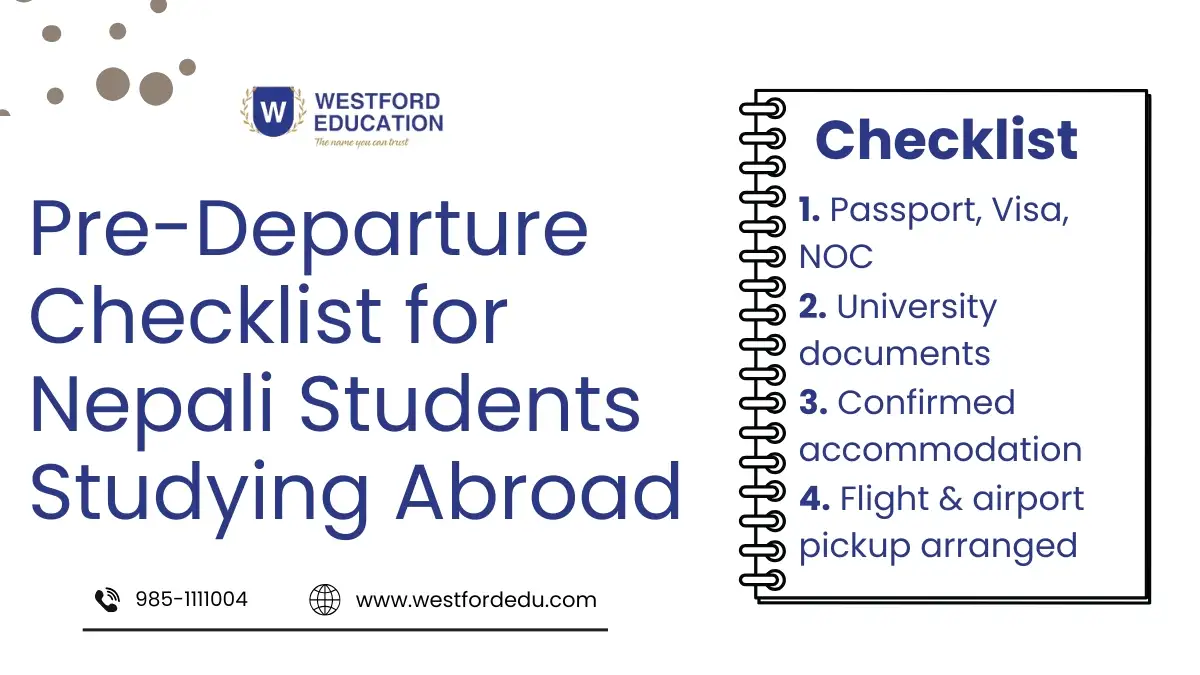

Pre-Departure Checklist for Nepali Students Studying Abroad
Getting your student visa approved feels like the finish line, but it isn’t. Before you fly out of Nepal, there’s still a list of things to sort out: documents, NOC-related formalities, accommodation, money, and the small but important details of actually getting to your new home.
It’s easy to underestimate how much of this needs attention in the final weeks. Forgetting a document at the airport, showing up without a confirmed place to stay, or landing with no plan for that first night can turn an exciting move into a stressful one right when you have the least energy to deal with it.
This Pre-Departure Checklist for Nepali Students Studying Abroad walks through everything in the order you actually need to handle it, starting with what matters most and working down to the practical, last-minute details.
Quick Answer
If you only have time to check a few things before your flight, start with these:
- Confirm your passport, student visa, and other essential travel documents.
- Complete NOC and other Nepal-side departure requirements where applicable.
- Keep university, accommodation, and financial documents organized and easy to access.
- Confirm your flight, accommodation, and plan for getting from the airport to where you will be staying.
- Keep the things you cannot afford to lose or need immediately after landing in your hand luggage.
- Run through a final check 24-48 hours before you fly.
What Should Nepali Students Complete Before Leaving Nepal?
Before leaving Nepal, prioritize your passport, visa, NOC, and related departure documents; university requirements; accommodation; finances; and your flight and arrival plan. Everything else builds on top of these.
It helps to think of your preparation in five groups instead of one giant to-do list:
- Essential documents
- Nepal side formalities
- University and accommodation
- Money and travel
- Packing and arrival preparation
Some of these need to happen early, like documents and NOC formalities, for instance, while others, like packing, can wait until closer to your departure date.
Priority | What to Complete | Why It Matters |
Essential | Passport and visa | Required for travel |
Essential | NOC / relevant Nepal formalities | Important for student departure |
Essential | University documents | Needed for enrollment and arrival |
Essential | Accommodation | Avoids arriving with nowhere to stay |
Important | Money and payment access | Covers first-week expenses |
Important | Flight and airport plan | Makes departure and arrival smoother |
Requirements for NOC and Nepal side formalities can be updated, so it’s worth confirming the current process through official immigration sources closer to your travel date rather than relying on what worked for a friend last year.
Check Your Passport, Student Visa, and Essential Travel Documents First
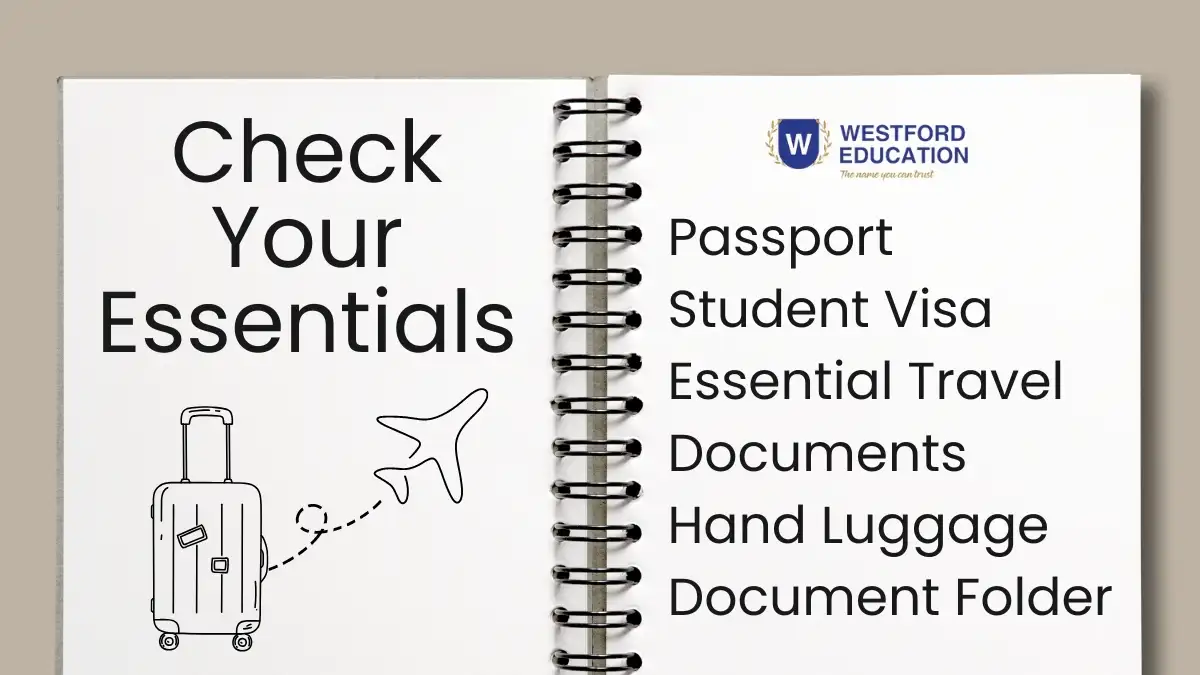
Before anything else, check that your passport and student visa are valid and that every detail on them is correct. This sounds obvious, but it’s where most last-minute panics come from.
Go through these carefully:
- Passport validity: Make sure it won’t expire partway through your course
- Visa validity and the conditions attached to it
- Correct spelling of your name across all documents
- Passport number matching your visa and university records
- Your intended travel dates versus your visa’s validity window
- Any transit visa requirements if your flight has a layover
Most importantly, don’t assume your F-1 visa requirements (In Context of USA) and conditions are identical to those of another student. Your visa and immigration requirements can depend on your individual circumstances, university, program, and travel plans.
For Nepali students preparing to study in the U.S., reviewing these details early can help you avoid last-minute complications and travel with greater confidence.
Create a Hand Luggage Document Folder
One habit that saves a lot of stress is putting all your essential paperwork in a single folder that stays with you, not in checked baggage.
Include:
- Passport and visa printouts
- University offer and acceptance documents
- Enrollment confirmation
- Flight and booking details
- Accommodation confirmation
- Relevant financial documents
- A list of emergency contacts
If your checked bag does not arrive when you do, you will still have the documents you need with you.
Complete Your NOC and Nepal Side Departure Requirements
Before leaving Nepal, make sure your No Objection Certificate (NOC) and any other required departure formalities are in order. These are easy to overlook when most of your attention is on your university and visa.
What to Check Before You Leave
A few things are worth confirming early:
- Your NOC is completed and available with your other important documents.
- Your offer letter, financial papers, identification, and other supporting documents are organized.
- The information in your documents is consistent with your course and institution details.
- You know what you are studying, where you are going, and how your studies are being funded in case you are asked at immigration.
You do not need to memorize every rule. The important thing is to get the paperwork sorted before the last few days, when even a small delay can become difficult to manage.
Tribhuvan International Airport’s immigration guidance currently lists a valid passport, a valid student visa, and an NOC among the core requirements for Nepali students travelling abroad for education. As procedures can change, check the latest information from the relevant Nepal authorities before your departure.
One useful tip: Keep your NOC and other departure documents in the same hand-luggage folder as your passport and university papers. That way, you can reach them easily when you need them.
Need help with your study-abroad preparation? Explore Westford Education’s study abroad guidance for support with choosing a destination, preparing your application, and getting ready for your journey.
Organize Your University and Academic Documents
Keep your university and academic documents organized and accessible before you leave Nepal; you’ll likely need them again during enrollment and orientation.
Split them into two simple groups. Your university documents should include your offer letter, acceptance confirmation, enrollment documents, tuition payment receipts, and any orientation information your institution has sent. Your academic documents cover certificates, transcripts, and English test results.
Where possible, carry both originals and photocopies, since some universities ask for physical copies during in-person registration even if you’ve already submitted digital versions.
Confirm Your Accommodation and Airport Arrival Plan
Before flying, know exactly where you’ll stay and how you’ll get there from the airport. This single step prevents one of the most common first-day problems international students face.
Before you leave, confirm:
- The full accommodation address
- Your check-in date and time
- What happens if you arrive outside normal check-in hours
- Contact details for your landlord, agent, or accommodation office
- How you’ll collect your keys
- A backup plan if your permanent housing isn’t ready yet
Plan How You Will Travel From the Airport
Look into your options in advance: university-organized airport pickup, public transport, an airport shuttle, or a taxi or ride-hailing service. Prices, availability, and safety of these options vary a lot by city.
Here’s a common scenario worth planning for: a student landing late at night should confirm in advance whether their accommodation allows late check-in and whether airport transport is actually running at that hour. Arriving to find both unavailable is a stressful way to start.
Prepare Your Money and Payment Options for the First Few Weeks
The first few weeks abroad can be more expensive than you expect. You might need to pay for transport, food, a SIM card, or items for your accommodation almost as soon as you arrive. It is worth having more than one way to access money, as a card may not work immediately or you may need cash before you have everything set up locally.
Typical early expenses to plan for include:
- Transport from the airport
- Food before you can shop or cook properly
- Accommodation deposits
- A local SIM or mobile plan
- Local transport passes or tickets
- Basic household items for your new place
Costs vary hugely by country and city, so avoid fixing on a specific amount and research typical living costs for your destination instead. Also check the current Nepal foreign exchange and banking rules that apply to students before you transfer or carry money abroad.
Confirm Your University Arrival and Enrollment Requirements
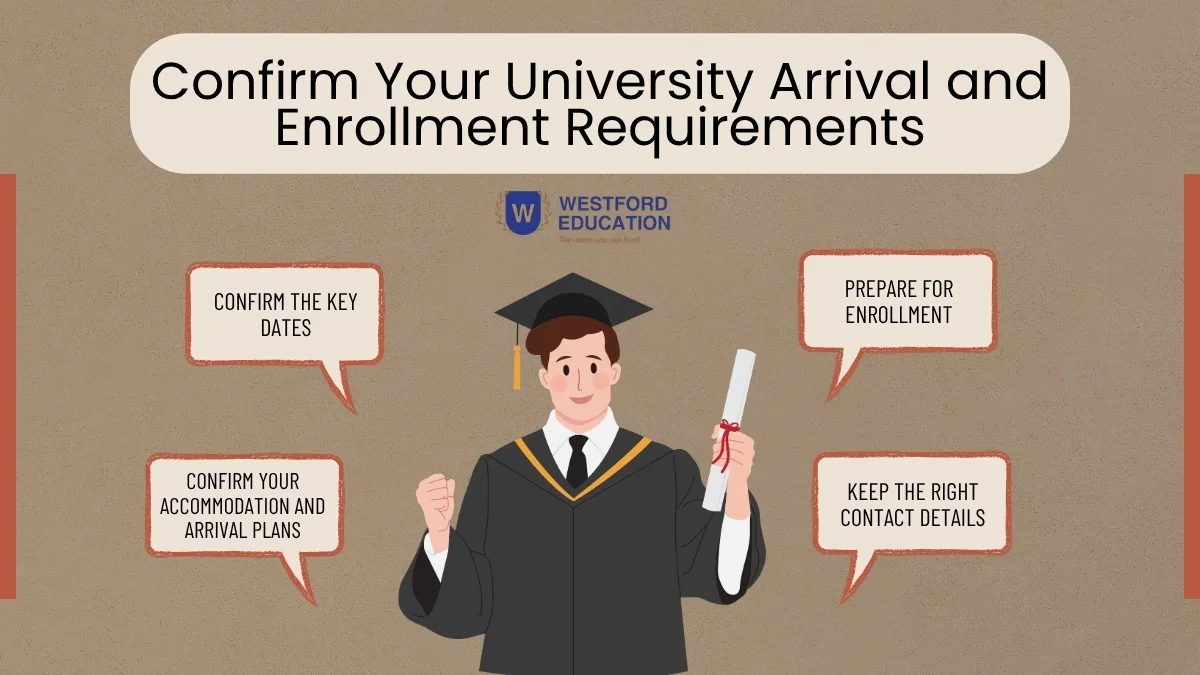
Before booking your final travel dates, review your university’s official guidance on arrival, orientation, and enrollment.
Confirm the key dates
- Course start date
- Orientation schedule
- Latest recommended arrival date
Prepare for enrollment
- Check which documents are required for in-person enrollment.
- Keep in mind that visa approval and university enrollment are separate processes. Completing one does not automatically complete the other.
Keep the right contact details: Save the contact information for your university’s International Student Office in case you need assistance before or after arrival.
Important: Confirm all of these details with your university before locking in your travel plans.
Arrange Health Insurance and Important Personal Requirements
Before you travel, review the health insurance, vaccination, and medical requirements that apply specifically to your destination and university. Requirements can vary by country and institution.
Confirm the requirements
- Check whether you need proof of health insurance before entry or are expected to arrange coverage after arrival.
- Verify any vaccination or medical requirements with official immigration or university sources.
If you take regular medication
- Carry enough medication for your initial weeks.
- Bring your prescription or supporting medical documentation.
- Check whether your destination has restrictions on bringing your medication into the country.
Important: Do not assume that insurance, vaccination, or medication rules from one country apply elsewhere. Always verify the requirements for your specific destination.
Pack Smart: What to Keep in Hand Luggage and Checked Baggage
Think about what you would need if your checked bag did not arrive with you. Your passport, university documents, payment access, medication, phone, and other essentials should stay with you in your hand luggage.
Hand Luggage | Checked Baggage |
Passport, visa, essential documents | Clothing |
Phone, laptop, chargers | Personal items |
Essential medication | Non-essential belongings |
Wallet and payment access | Bulkier items |
Accommodation details | Accommodation address, booking confirmation, and check-in details |
Check Airline Restrictions Before Packing
Before you pack, check your airline’s baggage weight limits, cabin baggage size, rules around batteries and power banks, and any restricted items. These vary between airlines, so don’t assume your friend’s airline rules apply to yours.
A Few More Things Before You Fly
Beyond documents and packing, a handful of smaller preparations make the first few days noticeably easier.
- Back up your documents digitally
Keep secure digital copies of your passport, visa, university documents, accommodation details, flight information, and insurance papers. If a bag or phone is lost, these backups mean you’re not starting from zero, though they’re a backup, not a replacement for originals where those are required. - Sort out your phone and communication plan
Research SIM or eSIM options for your destination, check whether airport Wi-Fi is available, download offline maps, and save emergency contacts before you land so you can reach your accommodation, family, or university the moment you arrive. - Learn the basics of your new city
You don’t need to know everything, but understanding your airport’s layout, your accommodation’s neighborhood, how to reach your university, typical weather, and rough living costs will make your first days far less disorienting.
Common Pre-Departure Mistakes Nepali Students Should Avoid
Most pre-departure problems come down to leaving things too late or assuming something will sort itself out. A little foresight avoids most of them.
- Starting NOC or document preparation in the final week
- Packing essential documents in checked baggage instead of hand luggage
- Flying out without confirmed accommodation
- Ignoring airline baggage and battery rules
- Depending on a single card or payment method
- Following outdated advice from social media instead of official sources
- Skipping the university’s official arrival and enrollment instructions
Your Final 48-Hour Pre-Departure Checklist
In the last 48 hours, stop making major changes and focus on confirming what’s already in place. This is the moment to double-check, not to add new plans.
Category | What to Confirm |
Documents | Passport, visa, NOC, university, and accommodation documents |
Travel | Flight time, airport reporting time, online check-in, airport transport |
Luggage | Weight limits, bag labels, hand luggage contents, restricted items |
Communication | Phone charged, emergency contacts saved, family informed of your schedule |
If everything on this table checks out, you’re genuinely ready the rest is just the journey itself.
Need Help Preparing for Your Study Abroad Journey?
If you’re still working through parts of this process, you don’t have to do it alone. Westford Education’s study abroad guidance supports Nepali students through university selection, visa preparation, and pre-departure planning for destinations including Australia, Europe, Canada, the UK, and the US.
Still deciding on a country or course after +2? Check out Westford Education’s guide to studying abroad after +2 for a clear breakdown of countries, courses, costs, and scholarships to help you plan your next step.
Final Thoughts
Pre-departure preparation isn’t really about packing a suitcase it’s about confirming your documents, Nepal side formalities, university requirements, accommodation, finances, and arrival plan, in that order of importance. Once those are locked in, everything else falls into place fairly easily.
Requirements change, and they differ by country, so always double check anything destination specific through official immigration or university sources rather than relying on general advice including this article. A well organised checklist like this one won’t remove every bit of nervousness before a big move, but it does mean you’re starting your international education journey prepared instead of scrambling.
If you’d like to talk through your specific situation, Contact Westford Education to discuss your next steps and pre-departure planning.
Frequently Asked Questions
What documents should Nepali students carry when going abroad to study?
At minimum, carry your passport, valid student visa, NOC where applicable, university offer and enrollment documents, accommodation confirmation, and relevant financial documents. Keep these together in your hand luggage rather than checked baggage.
Is NOC required for Nepali students going abroad for study?
NOC and related departure formalities are currently part of what Nepali immigration authorities look for in student travel. Since procedures can be updated, confirm the current requirement and process through official sources before you finalize your travel plans.
What should students keep in hand luggage?
Keep your passport, visa, essential documents, phone, laptop and chargers, payment access, and any essential medication in your hand luggage. These are the items you can’t afford to lose if your checked bag is delayed.
How much money should a student carry when travelling abroad?
There is no single amount that works for every student. Someone moving to an expensive city may need more than someone studying in a smaller and cheaper location. Look at your own accommodation and likely expenses for the first few days instead of following a random amount suggested online.
Should students book accommodation before leaving Nepal?
Yes, if possible. Having confirmed accommodation before you leave Nepal makes your arrival much easier. If your permanent accommodation is not ready yet, arrange a safe temporary place to stay and make sure you know how you will get there from the airport.
When should students book their flight?
Book once your visa is confirmed and you know your university’s arrival guidance and your accommodation’s check-in date. Booking too early, before these are settled, can create timing conflicts.
What should Nepali students do one day before flying abroad?
The day before your flight, go through everything one more time. Check your documents, confirm your flight details, and complete online check-in if available. Weigh your luggage, charge your phone, and let your family know your flight and arrival details.
What is the most important thing to check before leaving Nepal?
Start with your passport and student visa. After that, check your NOC and any other requirements you need to complete in Nepal, then make sure your university documents and travel arrangements are ready. Once these are sorted, the rest of your preparation becomes much easier to manage.