


Facts for Nepalese students to consider before studying in Australia
Facts for Nepalese students to consider before studying in Australia are basically just all the big things about school, money, visas, and life that you need to know before you decide to go there. It covers stuff like how good the schools are, what it costs to live there, work rights, student visa requirements, and what you can do after you finish your degree. Getting all these facts down helps Nepalese students actually know what they’re getting into so they can get ready for what it’s really like to live and study in Australia.
Here’s what you actually need to understand about living and studying in Australia for Nepalese students, based on real experiences and what matters most.
Top Facts of Studying in Australia
Studying in Australia is a top choice for international students because of its globally recognized education system, modern lifestyle, and strong career opportunities. For students planning to study abroad, Australia offers a balanced mix of quality education and real-world exposure.
From world-ranked universities to flexible work options and multicultural campuses, Australia provides an environment where students can grow academically and personally. Understanding the key facts before starting your journey helps you make confident and informed decisions.
Recommended Read: Best Cities in Australia for Nepalese Student
1. The GTE requirement is stricter than you think
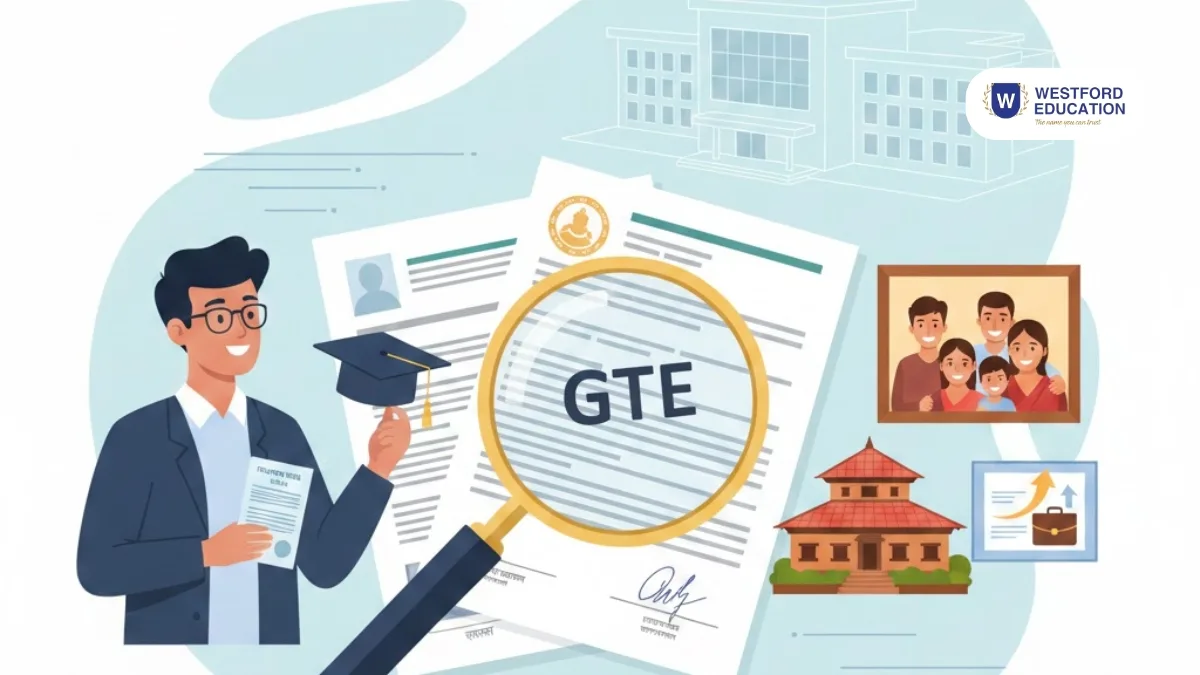
The Genuine Temporary Entrant (GTE) requirement isn’t just a formality. Australian immigration really digs into whether you’re genuinely coming to study or if you’re planning to stay permanently. For Nepalese students, this scrutiny is even higher because of historical visa misuse patterns.
You’ll need solid proof showing ties to Nepal family connections, property ownership, or career plans back home. Just saying “I’ll return after my studies” won’t cut it. Immigration officers look at your entire profile, including your family’s financial situation and your previous education pathway.
2. Financial proof needs to be genuine and traceable
When applying for your Australia student visa tips for Nepalese, don’t even think about submitting fake bank statements or borrowed funds. Australian authorities verify everything now. They want to see at least AUD 29,710 for living expenses for a year, plus your tuition fees.
The money needs to be in your account for at least three months before you apply. Sudden large deposits right before your application raise red flags. If your parents are sponsoring you, you’ll need their income tax returns, salary slips, property, and proper documents not just a bank balance.
And honestly, the cost of studying in Australia for Nepali students goes beyond what’s shown in visa requirements. Budget for things like initial setup costs, textbooks, health insurance, and those unexpected expenses that always pop up.
Recommended Read: Education Loan for Nepalese Students to Study Abroad
3. Course selection actually affects your visa approval
Not all courses are viewed equally by the Department of Home Affairs. If you’re jumping from a bachelor’s in engineering to a diploma in cookery, you’d better have a really convincing explanation. The course needs to make sense with your previous education and career goals.
Nepalese students sometimes choose courses based purely on what’s easiest to get into or what friends recommend. That’s a mistake. Your course choice should show clear progression and align with Nepal’s job market if you’re planning to return.
Recommended Read: PR Friendly Course in Australia
Need help choosing the right course for Australia?
Westford Education can help you choose one best for you. Course selection plays a major role in visa approval and future career outcomes. Speak with experienced counsellors who understand Australian visa rules and Nepalese student profiles.
4. The 80% attendance rule is non-negotiable
Australian institutions track your attendance religiously. If you drop below 80% without legitimate reasons, your student visa can be cancelled. No exceptions.
Some Nepalese students think they can skip classes to work more hours. Bad idea. Your education provider reports your attendance to the Department of Home Affairs. Even if you’re passing your exams, low attendance alone can get you into serious trouble.
Medical certificates and genuine emergencies are acceptable, but you need proper documentation. “I was sick” without a doctor’s note won’t help you.
5. Work restrictions are strictly enforced now
While studying, you’re allowed to work 48 hours per fortnight during the semester and unlimited hours during breaks. But here’s what many don’t realize: working even one hour over that limit can result in visa cancellation.
Some employers might encourage you to work more, especially in cash-in-hand jobs. Don’t do it. The Australian Taxation Office and the Department of Home Affairs share information. Getting caught working illegally doesn’t just affect your current visa it can ban you from Australia for years.
Plus, your primary purpose is studying. If your grades drop because you’re working too much, your education provider will notice and might report you.
Dont miss anything. Start your journey from our complete guide to study in Australia.
6. Health insurance (OSHC) is mandatory from day one

Overseas Student Health Cover isn’t optional. You need it from the day you arrive until the day you leave. Some students try to save money by not maintaining proper coverage. That’s risky.
Medical costs in Australia are expensive. A simple doctor’s visit can cost $80-100 without insurance. If you need emergency treatment or hospitalization, you’re looking at thousands of dollars.
Your OSHC needs to cover your entire visa duration. If your visa gets extended, you need to extend your insurance too.
7. Accommodation costs vary wildly by city
Living and studying in Australia for Nepalese students means understanding the huge cost differences between cities. Sydney and Melbourne are significantly more expensive than cities like Adelaide, Brisbane, or Perth.
Student accommodation in Sydney can easily cost AUD 300-400 per week for a basic room. In Adelaide or Tasmania, you might find something decent for AUD 150-200. That difference adds up to thousands of dollars per year.
Many Nepalese students share apartments to split costs, which is smart. But make sure you’re on the lease and understand your rental rights. Some landlords take advantage of international students who don’t know local tenancy laws.
Recommended Read: Best Consultancy for Australia in Nepal
8. Part-time jobs aren't guaranteed
The study in Australia for Nepali students’ guide should mention this clearly: finding part-time work isn’t automatic. The job market is competitive, especially for roles that don’t require much English or local experience.
Retail, hospitality, and delivery jobs are common for students, but these positions often go to people with connections or those who apply quickly. Don’t rely on getting a job immediately after arrival.
Your English needs to be genuinely good for most customer-facing roles. Basic conversational English won’t be enough. And some employers prefer students who can work flexible hours, which might conflict with your class schedule.
9. English proficiency affects everything
Meeting the minimum IELTS or PTE score is just the start. Real-life English in Australia, especially Australian slang and accent,s can be challenging even if you scored well on tests.
This affects your social life, your ability to follow lectures, your job prospects, and even simple things like understanding rental agreements or dealing with government services.
Invest time in improving your practical English skills before and after arrival. Join student groups, practice speaking, and watch Australian TV shows. It makes a massive difference.
10. Your qualification might not be recognized back home
This is something many Nepalese students’ guides to studying abroad sources skip over. Not all Australian qualifications are recognized or valued equally in Nepal.
Before choosing a course, research whether your degree or diploma will be accepted by Nepal’s education authorities or relevant professional bodies. Some vocational courses popular with international students don’t have much value back home.
If you’re planning to eventually return to Nepal, make sure your qualification will actually help your career there. Talk to people who’ve done similar courses and returned.
Recommended Read: Australian Student Visa Interview and Questions
11. Cultural adjustment takes time

Moving from Nepal to Australia isn’t just about academics. The cultural differences are real and can affect your mental health and studies.
The independence expected from you, the different communication styles, and the individualistic culture all of this takes adjustment. Many Nepalese students feel lonely or overwhelmed in the first few months.
There’s a significant Nepali community in most Australian cities, which helps. But don’t just stick to your own community. Balance is important for both comfort and integration.
12. Banking and money transfers need planning
Setting up banking in Australia is essential, and you should do it soon after arrival. You’ll need a Tax File Number (TFN) too, even if you’re not working immediately.
Sending money between Nepal and Australia involves fees and exchange rate fluctuations. Apps like Wise or Remitly often give better rates than traditional banks. Plan your transfers carefully to avoid losing money on poor exchange rates.
Keep records of all your transactions. You’ll need them for tax purposes if you work, and for your visa conditions.
13. The points system for permanent residency keeps changing
Many Nepalese students hope to eventually get permanent residency after studying. That’s fine, but the immigration system changes frequently. What’s available today might not be there when you graduate.
Your age, English score, work experience, and field of study all matter. Some courses give you extra points for regional study or in areas of shortage. But these lists update regularly.
Don’t base your entire course selection purely on PR possibilities. Things change, and you might end up with a qualification you don’t actually like or can’t use if the immigration rules shift.
Recommended Read: Australian Visa Assesment Level Nepal
14. Regional areas offer different opportunities
Studying in regional Australia (outside major cities) can actually benefit you. The costs are lower, there’s often easier access to part-time work, and you get extra points if you’re looking at permanent residency later.
Places like Tasmania, South Australia (outside Adelaide), regional Queensland, and many areas in Victoria are classified as regional. The lifestyle is quieter, but for serious students, that’s often better.
Some universities in regional areas also offer specific scholarships or support for international students. Worth checking out.
15. Support services exist but you need to use them
Australian universities have extensive support services counseling, academic help, career advice, financial assistance. But they won’t come looking for you.
If you’re struggling with anything, reach out. Mental health support is available and completely confidential. Academic support can help you understand assignment requirements and improve your writing.
Many Nepalese students feel embarrassed to ask for help or think they should figure everything out alone. That’s not necessary. These services are included in your fees use them.
16. Tax obligations are serious
If you work in Australia, you need to lodge a tax return every year. Even if you earned below the tax-free threshold, you still need to file.
Keep all your payslips and records. Employers should be paying you properly with tax deducted. If someone offers you cash-in-hand work, understand that it’s usually illegal, and you have no protection if something goes wrong.
You might get a tax refund when you file your return, which is basically free money. Don’t skip this process.
17. Visa conditions continue after course completion
After you finish your course, your student visa typically gives you a short grace period to either leave Australia or apply for a new visa. Don’t overstay this period.
If you want to stay longer, apply for a post-study work visa or another relevant visa before your student visa expires. Overstaying even by a day creates serious immigration problems.
Plan ahead. Know your visa expiry date and what your options are well before that date arrives.
Final Thoughts
Look, studying in Australia isn’t some guaranteed win where everything just works out. It is definitely not easy, and the students who do well are the ones who prepare properly and stay grounded.
The ones who struggle usually have crazy expectations or try to cheat the system with visa conditions. You’ve got to do your own research beyond the brochures and talk to real people about the cost.
Be real with yourself about why you want this and if you are ready for the Australia education system. If you go in with your eyes open, it can be an amazing place to be.
Just make sure you’re doing it for the right reasons, and you’re prepared for the reality. Being smart about the Australian student visa requirements Nepal is the only way to make it work.
Ready to take the next step toward studying in Australia?
From course selection and visa documentation to pre-departure support, expert guidance can save you time, money, and visa stress.
FAQs
How much money do I need to show for an Australian student visa?
You’ll need to prove you have at least AUD 29,710 for living costs plus your full tuition fees.
The cash should be in your account for three months before you apply, so don’t just dump money in last-minute or it’ll look fishy.
Can I work full-time while studying in Australia?
No, you can only work 48 hours per fortnight during semester. During official breaks, you can work unlimited hours. Breaking this rule even by one hour can get your visa cancelled, so it’s not worth the risk.
Is 80% attendance really mandatory for international students?
Yes, it’s non-negotiable. Even if you’re passing all your exams, dropping below 80% attendance without legitimate documentation can lead to visa cancellation. Your institution reports this directly to immigration.
Will my Australian degree be recognized in Nepal?
Not automatically. You need to check with Nepal’s education authorities and relevant professional bodies before choosing your course. Some vocational diplomas popular with international students don’t have much recognition back home.
How expensive is accommodation in Australia?
It varies wildly by city. Sydney and Melbourne can cost AUD 300-400 per week for a basic room, while regional areas like Adelaide or Tasmania might be AUD 150-200. Choose your city based on what you can actually afford long-term.
Is it easy to find part-time work as a Nepalese student?
Not guaranteed at all. The job market is competitive, especially for students without strong English skills or local experience. Don’t budget based on having a job from day one—it might take weeks or months to find something.
Do I really need health insurance as a student?
Yeah, you basically have to have OSHC (Overseas Student Health Cover) from the second you get there until the day you fly home. If you don’t have it, even a tiny checkup at the doctor is going to cost you like $80 to $100.
And honestly, if something actually goes wrong and you need the ER, you’re looking at thousands of dollars coming straight out of your own pocket.
Can I choose any course I want for my student visa?
Not really. Your course ought to fit in with what you’ve learned before and what you want to do with your life. If you go from being an engineer to a cook without a good reason, immigration inspectors will be suspicious.
Is studying in regional Australia better than in cities?
It depends on your priorities. Regional areas are cheaper, often have easier access to part-time work, and give you extra points for permanent residency later. But cities have bigger Nepali communities and more job variety.
What happens if I fail too many subjects?
If you’re not making satisfactory course progress (usually passing at least 50% of subjects each semester), your institution must report you to the Department of Home Affairs. This can lead to visa cancellation if it continues.
Can I stay in Australia after my course finishes?
Your student visa gives you a short grace period after course completion. If you want to stay longer, you need to apply for a post-study work visa or another visa before your student visa expires. Don’t overstay even by a day.