


Recent Changes in UK PR Rules 2025 | New 10-Year Settlement Rule
The recent changes in UK PR rule have completely reshaped what it takes to settle permanently in the UK. According to the UK immigration white paper 2025, getting Indefinite Leave to Remain 2025 or any future PR status is no longer as straightforward as completing five years in the country. Instead, the government now wants applicants to establish that they are truly valuable by having excellent talents, a steady income, being involved in the community, and a clear record of following immigration regulations.
These revisions are part of a larger series of UK settlement regulation modifications that are meant to lower the number of immigrants and protect job possibilities for local workers. Because of this shift, many students, skilled workers, and families are now worried about the stricter requirements, especially the 10-year ILR rule UK and the new earned settlement approach. The entire system has moved away from simply counting years of residence toward evaluating what each person actually contributes.
Need expert guidance to navigate the new UK PR rules? Westford Education Consultancy can help you plan your pathway to permanent residency.
Old vs. New UK PR Rules What’s Changing?
The new UK PR rules put a stop to the old, fixed-time settlement system that let most applicants get ILR after five years with only minimum checks. Starting in April 2026, the UK will move to an earned model that looks at skills, income stability, and contributions instead of just years of residence.
These revisions are part of larger changes to the UK’s settlement rules. The government wants to reward people who bring real value to the country instead of just staying there. In simple terms, PR is no longer guaranteed by time alone it now depends on what each person brings to the country.
Route/Category | Old Timeline | New Timeline | Key Requirements |
High-Skilled Workers (£50k+) | 5 yrs | 5 yrs | Degree-level role, sponsor |
Public Sector (Healthcare/Education) | 5 yrs | 5 yrs | Specific sectors only |
British Citizen Partners | 5 yrs | 5 yrs | Exempt/unchanged |
Community Contributors/Volunteers | N/A | 5-7 yrs | Verified integration evidence |
Standard Migrant Workers/Families | 5 yrs | 10 yrs | Points for salary/skills |
Medium-Skilled | 5 yrs | 10-15 yrs | Higher thresholds |
Refugees (Resettlement) | Varies | 10 yrs | Program-specific |
Irregular Entry/Overstayers | 10-20 yrs | 20-30 yrs | Compliance history |
Recommended Read: MD-115 Australia Rule
Why Is the UK Government Making These Changes?

The recent changes in UK PR rules reflect strategic goals:
- Reducing net migration and easing public pressure
- Making settlement more selective to attract high-value talent
- Rewarding contribution over presence, ensuring migrants integrate into communities
- Preventing visa misuse and long-term dependency on low-skilled routes
The UK wants migrants who actively uplift local communities, support the economy, and meet higher professional standards.
Do you want to study in the UK? Learn everything about new rule and then only make your decision.
Key Timeline and Reforms of Recent Changes in UK PR Rule
The rollout of UK PR and immigration reforms is taking place over two years. Here’s an easy timeline to understand:
May 2025
In May 2025, the UK published a White Paper explaining all the major immigration changes, including the new 10-year ILR route. This month also starts the first public consultation, where the government collects feedback before finalizing the new rules.
April 2025
In April 2025, the salary requirement for Skilled Worker visas increased, making it harder for lower-paid workers to qualify. Visa fees and the NHS surcharge will also rise, and families bringing dependants had to meet higher financial requirements.
July 2025
By July 2025, the UK narrow down which jobs are eligible for skilled visas. Recruitment from overseas for social care jobs ended, which greatly affect care workers trying to enter the UK through this route.
November 2025
In November 2025, sponsor licence fees would go up, making it more expensive for companies to hire international workers. Rules for Seasonal Worker visas will also change, affecting industries like farming and horticulture.
February 2026
February 2026 marks the end of the consultation period. After reviewing the feedback, the government will publish final explanations and clarifications about all the new immigration and PR changes.
April 2026
In April 2026, the new Earned Settlement Model officially begins. People who already hold visas issued before 2026 will receive transitional protections, meaning they can continue under older rules for some time.
Awareness of these dates is critical. Migrants must plan their visa applications, maintain records, and meet the criteria for the 10-year ILR rule UK to avoid delays.
Recommended Read: Best Consultancy in Kathmandu for Abroad Studies.
How the Earned Settlement Model Works?
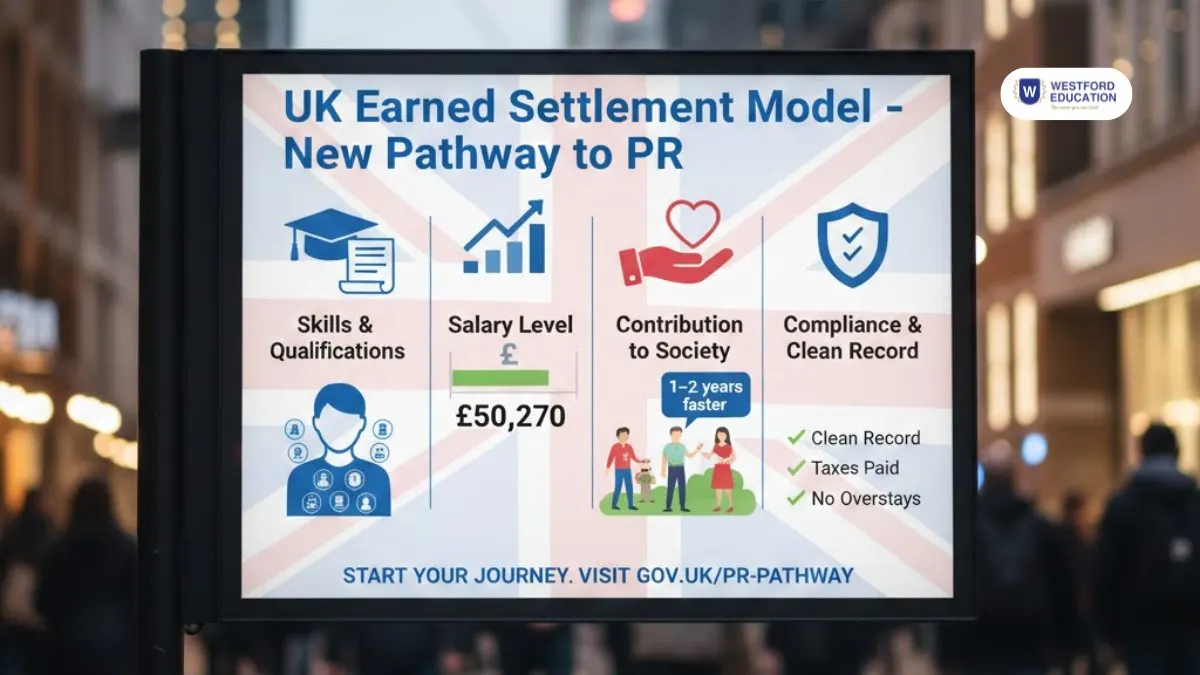
The UK has introduced a new system called the Earned Settlement Model. This means Permanent Residency (PR) is no longer just about how many years you stay in the UK it now depends on your value, skills, and contribution.
The model is built on four main pillars:
1. Skills & Qualifications
The new UK PR rule gives more value to your education, training, and work skills. If you have a degree, special certification, or experience in an important field, you have a better chance of getting PR faster. This means the UK wants people who can support growing industries and fill skill gaps.
2. Salary Level
Your salary now matters a lot for getting PR in the UK. When you earn more, it shows that you can support yourself and won’t need government help. This makes your PR process faster. People who earn more than £50,270 a year are on the quickest path to PR because this amount proves they are strong contributors to the country’s economy.
3. Contribution to Society
The UK now rewards people who positively impact their community. If you volunteer, mentor others, help in charity events, or support local organizations, it shows you are adding value beyond work. These contributions can reduce your ILR waiting period by one to two years, making your PR process quicker.
4. Compliance & Clean Record
Following UK laws and maintaining a clean record is more important than ever. Issues like overstaying your visa, tax mistakes, fines, or misuse of benefits can slow down or even block your PR eligibility. Staying fully compliant proves that you are responsible and trustworthy, which the UK now sees as essential.
Confused about which route fits you best? Get personalized advice from Westford Education Consultancy to plan your UK PR journey efficiently.
How Long It Now Takes to Get UK PR?
PR Timeline | Who Qualifies & Description |
5 Years (Fastest Route) | This path is for people who have strong skills, high salaries, or a direct connection to the UK. Workers earning over £50,270, public sector staff like nurses and teachers, partners of British citizens, and Hong Kong BN(O) visa holders qualify the quickest. They meet the UK’s needs for talent, stability, and long-term contribution. |
5–7 Years | This route is for people who help their community through volunteering or social contribution. The UK now rewards kindness and community service, so even mentoring, charity work, or support programs can shorten your PR waiting time. |
10 Years (Standard Route) | Most migrant workers and families use this normal PR timeline. If a person stays legally in the UK for 10 years, follows the rules, and works consistently, they can qualify under the long-residence rule. It is the most common and straightforward path. |
Up to 15 Years | Medium-skilled workers, who may not meet the high salary or specialist-skill requirements, often fall into this category. They are still valuable to the UK, but may need a longer period before becoming eligible for PR. |
Up to 20 Years | Refugees not included in a special resettlement program may wait longer due to their visa category. They must show long-term residence and continued compliance before qualifying for PR. |
Up to 30 Years | People who entered the UK illegally or overstayed their visas must prove many years of continuous residence and good behaviour. This is the longest PR timeline because the person did not begin their stay legally. |
No Qualification | Individuals earning below £12,570 for several years or without any other income source may not qualify for PR at all. The UK sees low income as financial instability, meaning the person may rely on public support. |
You can get updates about the rules from the UK government website.
Impacts on Existing and Future Migrants
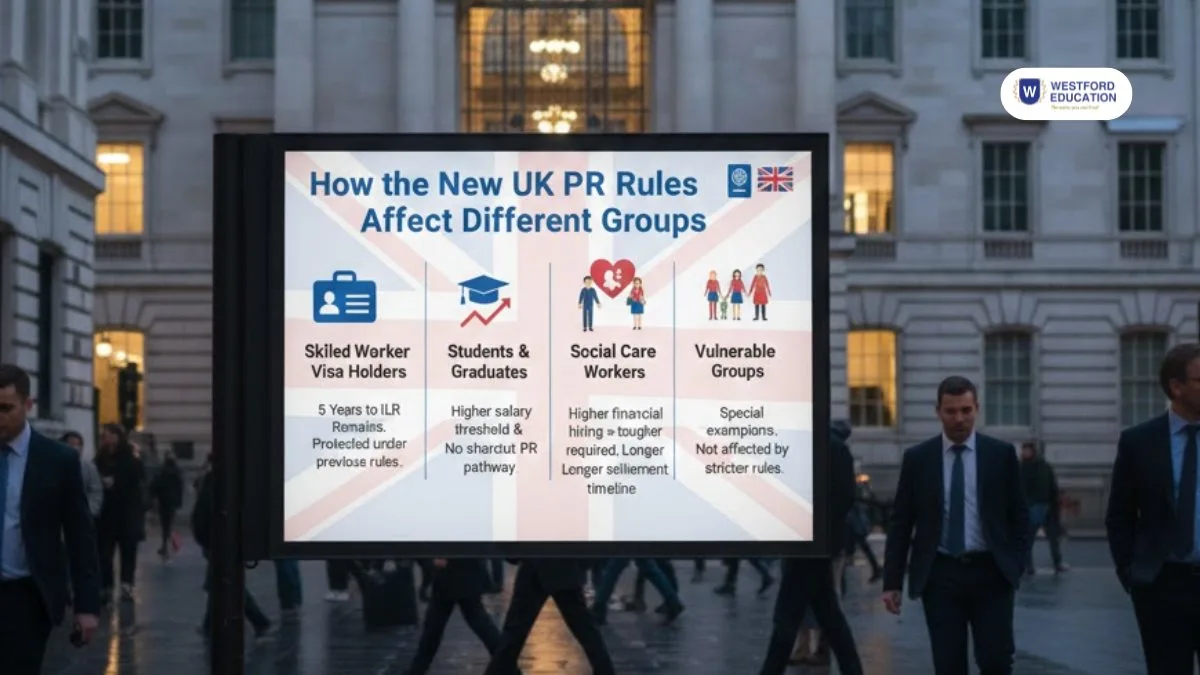
The new UK PR rules are bringing big changes for workers, students, families, and care professionals. Some people will still have faster and easier paths, while others will face stricter requirements and longer timelines. Your visa type, salary, skills, and personal situation now play a much bigger role in how quickly you can get Permanent Residency. Understanding how these rules affect each group can help you plan better for your future in the UK.
1. Skilled Worker Visa Holders
If you applied for a Skilled Worker visa before the new rules start, you can still get ILR after 5 years. This is good news because it protects people already in the system and keeps the old 5-year PR pathway for them.
2. Students & Graduates
For students and new graduates, switching to a Skilled Worker visa will become more difficult. You will need a higher salary, stronger proof from your employer, and must meet stricter sponsorship rules. There will be no easy or shortcut routes to PR, so planning early becomes important.
3. Social Care Workers
Social care workers will face one of the toughest changes because overseas hiring for care jobs is ending. This means fewer opportunities for foreign care workers, and their pathway to PR may become longer and more complicated.
4. Families & Dependants
Families and dependants will need to show more financial proof to stay in the UK. This includes enough income and savings to demonstrate stability. Because of the tighter checks, settlement may take longer than it used to.
5. Vulnerable Groups
People in vulnerable situations such as victims of domestic abuse, survivors of trafficking, and those in humanitarian cases will continue to receive special exemptions. This means they will not be affected by the stricter rules in the same way as others.
How Should Migrants Prepare For PR Success after the Recent Changes?
With the UK’s PR rules becoming much tougher, the best way to secure your future is to prepare early. Your salary, financial stability, community involvement, and compliance with every rule now matter more than ever. By improving these areas step by step, you can build a stronger PR profile and avoid delays later. These key actions will help you stay ahead and increase your chances of getting PR under the new system.
1. Aim for Higher Salary Brackets
Earning a higher salary can speed up your PR process. The UK now rewards people who reach income levels like £30,000, £40,000, and especially £50,000. These salary steps show strong financial stability, which makes your PR chances much better and faster.
2. Build Financial Independence
To qualify for PR under the new system, you must show that you can support yourself. This means avoiding public funds and keeping your tax records clean and accurate. The more financially independent you are, the stronger your PR profile becomes.
3. Community Engagement
Volunteering is now an important part of the PR scoring system. Helping your community—such as supporting charities, mentoring, or joining local events can reduce your PR waiting time by several years. Even small efforts make a big difference.
4. Stay 100% Compliant
Following every visa rule is extremely important. Never overstay your visa, renew your BRP before it expires, and always keep your address updated. Good compliance protects your PR chances, while even small mistakes can delay your application.
5. Maintain Strong Documentation
Good records help prove your eligibility for PR. Keep payslips, P60s, tenancy agreements, volunteer certificates, and other important documents safely. These papers show your work history, financial stability, and community involvement all key parts of the new PR system.
Recommended Read: Top Consultancy in Nepal for Abroad Studies.
Final Thoughts
The recent changes in UK PR rule are fundamentally reshaping what it means to settle permanently in the UK. The shift to the 10-year ILR rule UK and the introduction of the earned settlement model UK, along with higher salary thresholds, signal a more selective and merit-based approach. Time spent in the country alone is no longer enough; migrants must now demonstrate real skills, financial stability, and meaningful contributions to society.
To succeed under this new system, careful planning is essential. Applicants need to stay fully compliant, enhance their professional skills, and engage actively with their communities.
Every successful UK journey starts with the right guidance. Discover what makes Westford Education Consultancy a trusted partner for your future.
Frequently Asked Questions
What is the recent UK PR rule change in 2025?
The UK introduced a stricter settlement pathway, including a 10-year ILR rule and the earned settlement model.
How does the new 10-year ILR rule work?
Most workers and families now need 10 years to qualify for PR unless they fall into high-skilled or contribution-based routes.
Who is affected by the settlement rule changes?
Students, workers, care workers, families, refugees, and overstayers—all face new timelines and requirements.
What is the earned settlement model?
A merit-based system focusing on skills, salary, contribution, and compliance.
How long does it now take to get UK PR?
Anywhere between 5 and 30 years depending on your route and contribution.
Are current Skilled Worker visa holders affected?
Those who applied before reforms can still qualify for ILR after 5 years.
How will PR rules affect students and graduates?
They will face higher salary thresholds and stricter switching rules.